I was going through the archives of the blog that Basecamp’s founders have been writing for years. Their stance on the internal “meeting” culture caught my attention quite a lot.
These guys have an interesting mindset. They are against internal meetings, and the reason that grabbed my attention is simple: they are basically right. Especially now that it’s 2026…
First, let’s unpack what a “modern company” means from my perspective. After the pandemic, office setups have been gradually disappearing and, with the AI revolution that followed, in my personal opinion it’s an inevitable future reality that tech companies will move away from office environments. Let’s park that for a moment — that’s my definition of a modern company. No office, heavy use of AI agents.
Let’s do a bit of reasoning. Since you spend time on LinkedIn as well, you’re probably joining 1–2 internal “meetings” per week. You talk about a specific topic, but what percentage of that conversation actually stays in mind after the meeting ends? Most of it doesn’t. There are 10 topics, 6 are forgotten, 2 are remembered vaguely, and if you’re lucky, 2 of them are truly digested and kept as a useful anecdote or a real “decision” in your pocket. This is called lost data.
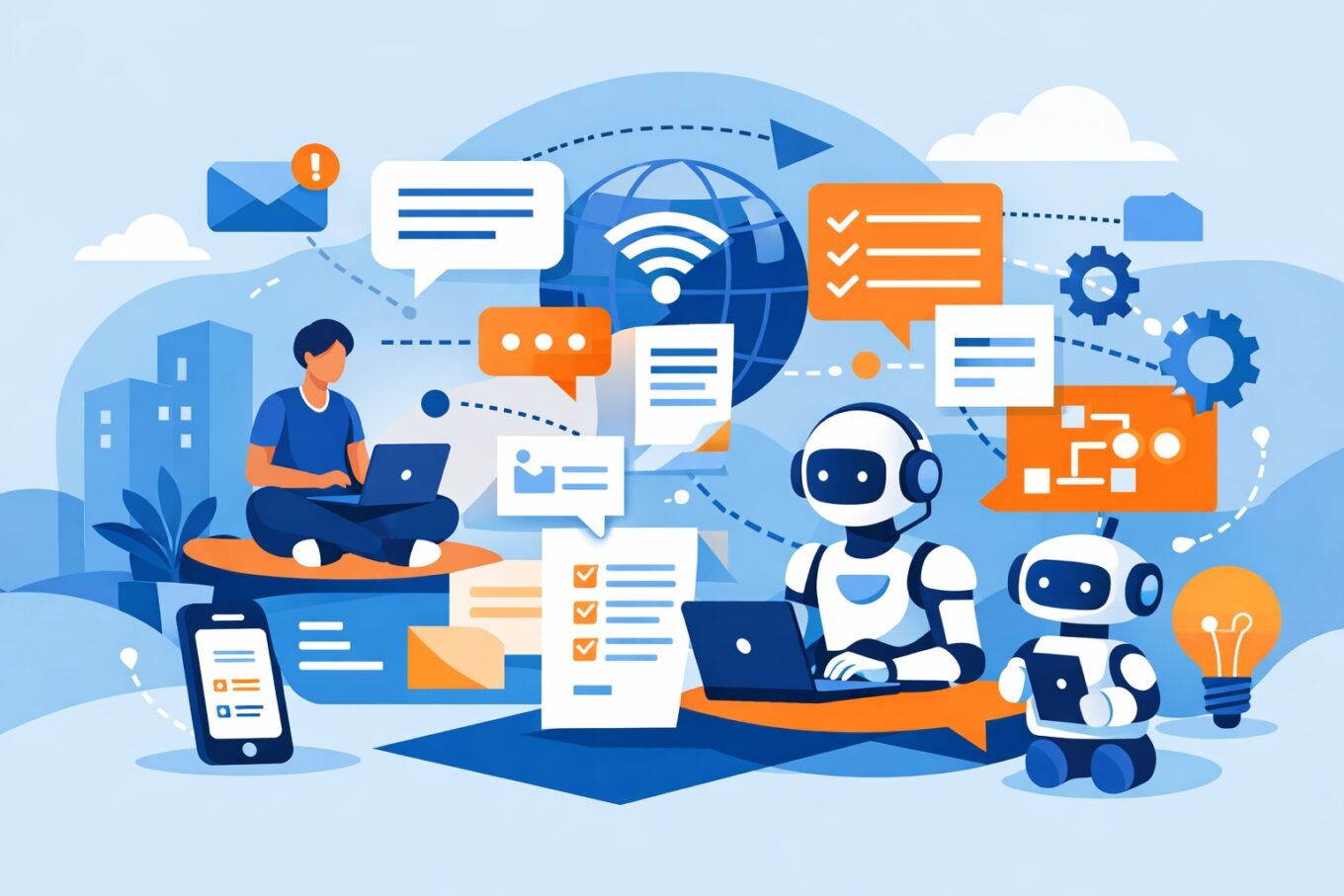
Now let’s think about it the other way around. Imagine a company where written communication is the only protocol. What’s your problem? Write it. Get an answer, in writing. No chaos, the chance of it being forgotten is minimal, and the chance of revisiting it later is completely up to you.
What’s the next step of this? What do we get when all communication protocols inside the company are turned into written form? It’s very simple — THIS IS IMPORTANT. In a company where communication runs as a written culture, it becomes incredibly easy to connect decisions to agents.
Early-stage startups can continue to wear their chaotic environments like a sacred badge of honor, a necessary suffering that founders must endure. Meanwhile, the ones who build their operations in written form from day one will actually be the modern companies of the future, because handing over their processes to agents will depend on a single decision-making mechanism.
And the main reason why large corporate tech companies are probably ahead in making this shift is that their entire operational structure already runs on processes and procedures.