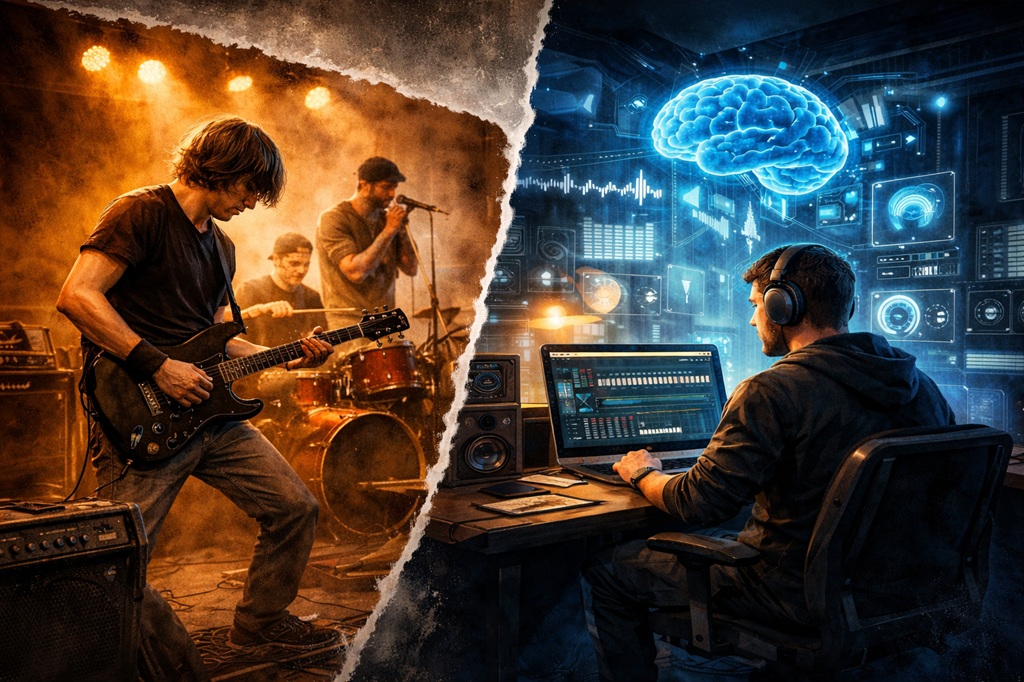
I started playing guitar 20 years ago. With a borrowed guitar from a guy where my mom worked. It wasn’t even mine. A few weeks later, he took it back saying “my guitar got scratched.” And I was left without a guitar. Anyway, later they got me one—cheapest possible (a Cort). I started playing. Back then there was no teacher, the internet wasn’t full of tabs like today, but somehow I learned.
We quickly formed a band. One friend got drums, another picked up bass. And we found a vocalist—basically a rapper turned singer. The goal was to play at the graduation ceremony at the end of the year. We achieved it. It was good.
After that, I formed a few more bands. All of them started as cover bands, and naturally evolved into writing our own music. But somehow, at some point, things always got stuck. Getting 4 people into the same room on a consistent weekly schedule and actually producing something is not easy—financially or mentally. And that’s where the core problem comes from.
I wonder how many people are out there with this unfinished story inside them… There shouldn’t be. There won’t be.
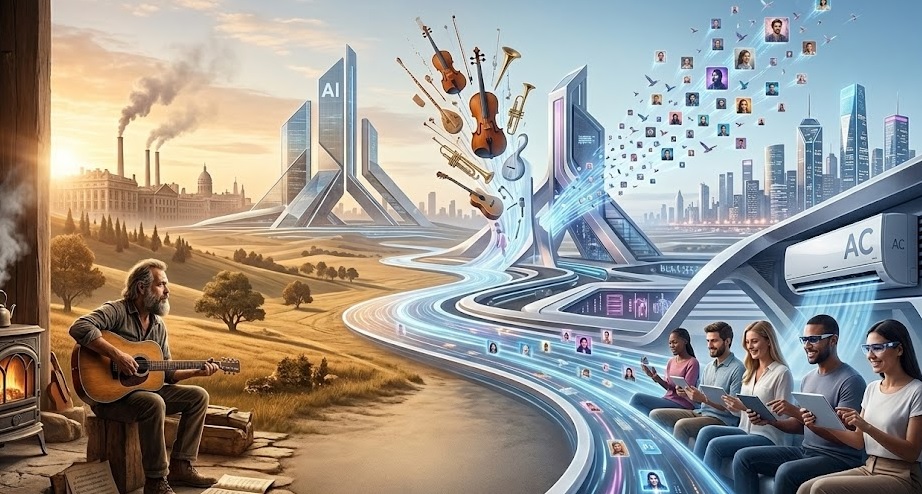
In this video, we used a slightly provocative tone. We show a process I’ve personally gone through and experienced how painful it is, and then we present the solution through AI-powered tools. At a fundamental level, I think this is the video that explains what we’re trying to do better than anything else we’ve made so far.
Calling this shift a paradigm change is not an exaggeration. Think about it: the traditional way of making music is fundamentally expensive. If you’re not earning money from your music personally, it becomes an even heavier financial burden. So what enters the picture here? You guessed it—AI.
I’m surrounded by a lot of amateur and semi-professional musicians. Since I’m in direct contact with them, I know exactly what kind of problems they face. If you try to tackle each problem one by one, you’ll get lost. But when you approach it from a higher level, everything becomes clearer. You can even test this yourself: ask anyone around you who plays an instrument what they’re doing right now, and the answer will be, “I’m working on a new composition, I’ll record it soon.” Ask the same person again one year later, and you’ll get a very similar answer. What does that mean? One year has passed, and there’s still no output. That’s lost TIME.
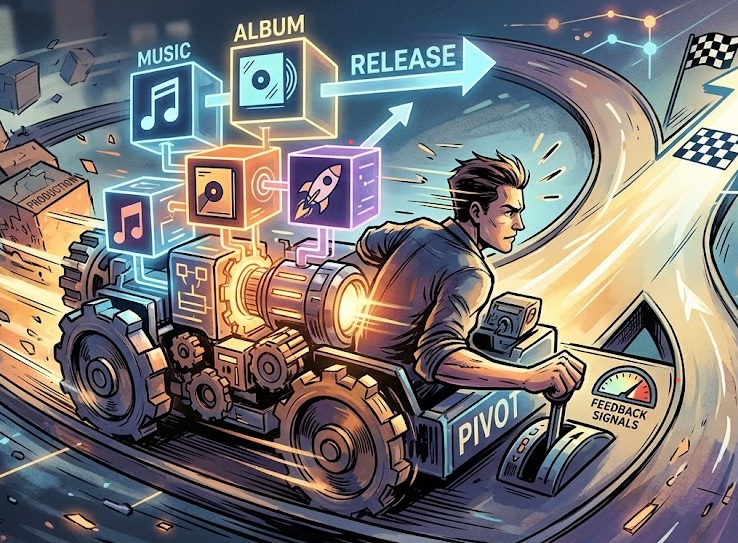
This is where our thesis starts to make sense. The idea of being able to create an album in 1.5 hours that is ready to be released on Spotify and Apple Music hits exactly the right nerve. The value of this concept will be understood much better over time. We’re not playing on something that gets understood overnight, and that itself signals a problem that needs to be digested gradually.
Every paradigm shift emerges from a destructive change in perception. This is no different. It’s the same dynamic as “Uber vs. taxi drivers.”